On May 12, 2000, a patent application was filed in the United States describing a way to make a dental injection stop working on command. The idea was simple to state and hard to execute: after a filling, use a second drug to reverse the lingering numbness of the lip, cheek and tongue. Two years later, on Aug. 13, 2002, the U.S. Patent Office granted it as patent 6,432,401, “Local anesthetic methods and kits.” It named two inventors. One was Eckard Weber, a founder of several biotechnology companies. The other was Howard I. Katz, a dentist.
Today Dr. Howard Katz practices at 613 Dentistry, a general and family office at 613 Third Ave. in downtown Chula Vista, alongside Dr. Carli Katz, a Tufts-trained dentist whom the practice describes as the dentist the office is built on. This feature traces how a South African dental graduate ended up on a California patent, and what the two dentists offer patients on a street the city has spent a decade rebuilding. It draws only on public records and published reporting. Dentist News Today did not interview either dentist, and coverage is never paid.
From Johannesburg to a second dental degree
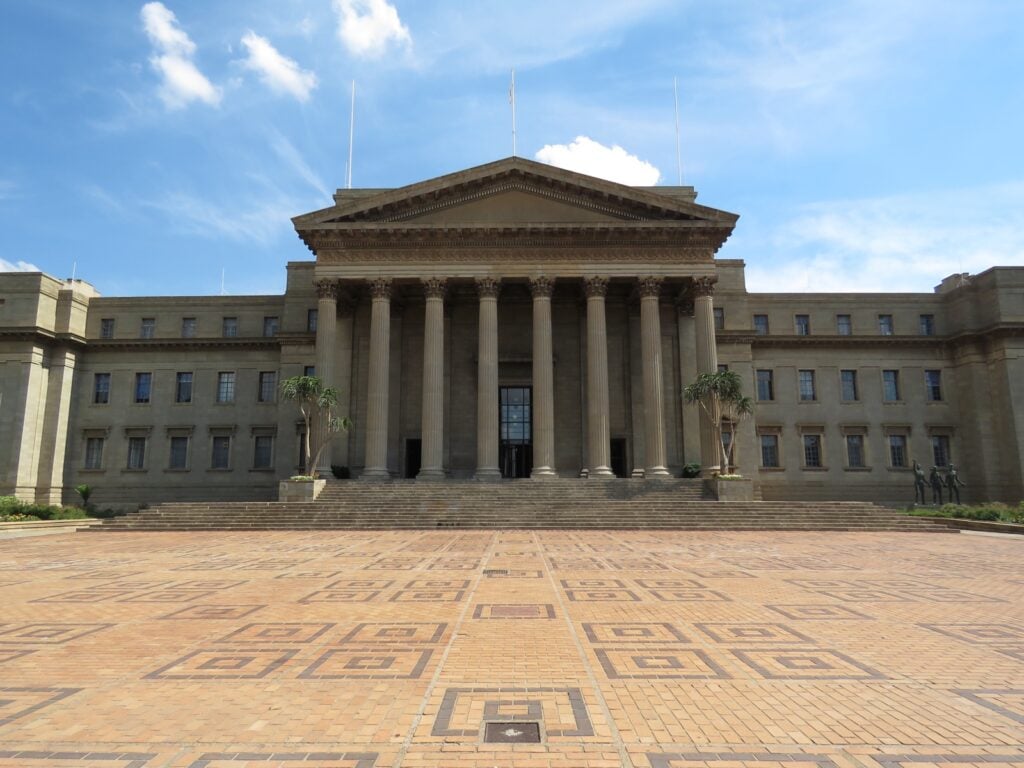
According to the practice, Howard Katz earned a Bachelor of Dental Surgery from the University of the Witwatersrand in Johannesburg in 1979, then earned a California DDS in 1986. Dental Board of California records show his license, number 36323, was issued in September 1988 and is current and active, with no public discipline. A 2008 profile in South Africa’s IOL news service identified him as a former pupil of Wynberg Boys’ High School in Cape Town.
The practice lists continuing-education diplomas in orthodontics from 1988, in CoreVent implant placement from 1991 and from the California Implant Institute in 2021. It also says he sits on the faculty of Nova Southeastern University’s dental school and leads an international dentofacial esthetics group and a dentist training program called Dentox. Those are the practice’s descriptions; we did not independently verify the faculty appointment.
The problem of the numb lip
Anyone who has had a filling knows the aftermath: the procedure is over, but the lip and tongue stay numb. Patent filings in this field describe the gap plainly, noting that soft-tissue numbness of the lip, cheek and tongue usually lasts hours longer than the anesthesia of the tooth itself. A North County practice that offers the reversal drug today describes the old routine in everyday terms: drooling, accidentally biting a lip, and trouble smiling, drinking or talking.
The 2002 patent describes giving a local anesthetic along with a vasoconstrictor and then reversing the effect with a low dose of a drug from the opposite class, an alpha-adrenergic receptor antagonist. The patent was assigned to Novalar Pharmaceuticals, a privately held San Diego company. The practice says Katz co-founded it.
The product that came out of that line of work was OraVerse, a formulation of phentolamine mesylate. Federal drug-approval records show the FDA approved it on May 9, 2008. Novalar called it the first drug indicated to reverse soft-tissue anesthesia after a dental procedure. In two Phase 3 studies of 484 patients at 18 U.S. centers, the company reported, the median time to normal sensation in the lower lip was 85 minutes shorter than in the control group, and within one hour, 41 percent of treated patients had normal lower-lip sensation, against 7 percent of controls. It was approved for patients 6 and older and Novalar planned to debut it at the ADA’s annual meeting in San Antonio that October.
Children were part of the case from the start. A separate Phase 2 study enrolled 152 young patients, and in those ages 6 to 11, Novalar reported, the median time to normal sensation was 75 minutes shorter, a 56 percent acceleration. No serious adverse events were reported in the trials; the most common side effect above control was brief pain at the injection site.
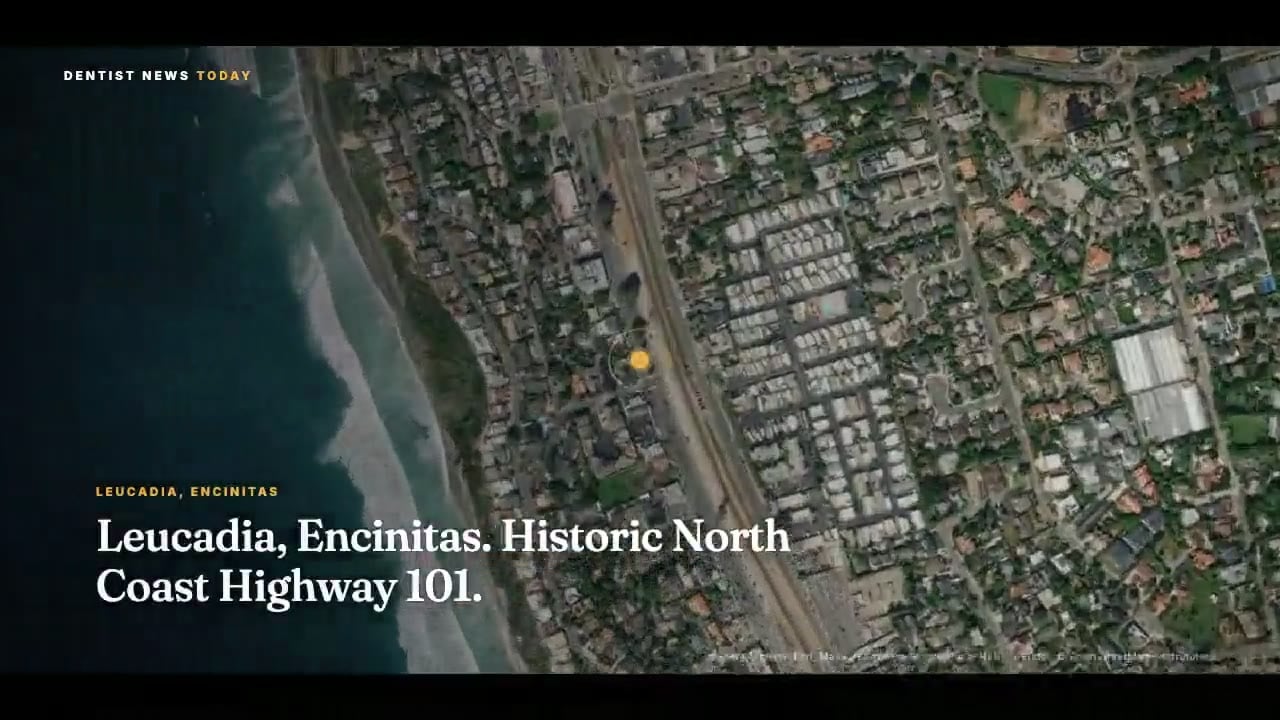
Back home, IOL ran the story under a headline crediting a South African-born dentist with inventing the drug. The article credited Katz and Weber with OraVerse and noted that in the profession Katz was also known as “Dr Botox” for his work using the neuromodulator in dentistry. The FDA’s records now list Septodont, the dental-anesthetic maker, as the holder of the OraVerse application. One Leucadia practice lists it among its technology today.
Botox, patents and the limits of the chair
Katz’s name appears on a second line of patent work. European application EP1551430, “Botulinum toxin dental therapies and procedures,” lists Howard I. Katz and Andrew M. Blumenfeld as inventors and Allergan, the maker of Botox, as the applicant. Filed in 2003 with a 2002 priority date, it describes injecting the toxin into the chewing muscles to reduce bite force while teeth, implants or grafts heal. The application was later withdrawn. The practice describes him more broadly as named on Botox patents for dentofacial uses.
The regulatory picture in California is narrower than the enthusiasm around dental Botox might suggest. The California Dental Association advised members in June 2022 that general dentists may not provide Botox or dermal fillers for purely cosmetic purposes; the products may be used only as part of a comprehensive dental treatment plan. 613 Dentistry’s own service list centers on conventional general dentistry.
Dr. Carli Katz and the practice today
The practice presents Dr. Carli Katz, DMD, as the clinician at its helm. She earned her Doctor of Dental Medicine at Tufts University in Boston, and the practice says she trained in Atlanta, Boston and Chicago. A staff profile published by DentalWorks, a multi-state dental group, fills in that map: a bachelor’s degree in psychology from Emory University in Atlanta and a master’s in biotechnology from Rush University in Chicago, before Tufts. Federal provider records list her with an Illinois dental license as well as California license 104986, which the state board shows as current and active.
The practice says she handles a full range of general and family care without routine referrals to specialists, and lists memberships in the American Dental Association, the California Dental Association, the International Academy of Oral Medicine and Toxicology and the local dental society. Both biographies mention, in nearly identical words, an ambition that is hard to forget: to be known as a Zumba-teaching dentist.
Howard Katz’s biography adds volunteer work that rarely shows up on a dental website: the St. Vincent de Paul dental clinic and the St. James–St. Leo dental clinic in San Diego, and dental clinics for refugees in Ofakim and Jerusalem in Israel.
The services listed on the practice’s website include exams, cleanings and children’s dentistry; tooth-colored fillings and veneers; dentures and partials; dental implants; Invisalign; extractions; and what the practice calls holistic dentistry.
Third Avenue, rebuilt
The office takes its name from its address, and the address matters. Third Avenue is Chula Vista’s original downtown. The city, whose Spanish name is usually translated as “beautiful view,” incorporated in 1911 when lemon groves covered thousands of acres; it later called itself the Lemon Capital of the World. Rohr Aircraft’s arrival in 1941 turned it into a defense-industry town, and by the 2020 census it had 275,487 residents, the second-largest city in the county. Third Avenue has its own footnote in American pop culture: a McDonald’s there was the first in the chain to get a PlayPlace, in 1971. Memorial Park, about six-tenths of a mile northwest of the office, holds the city’s monument to its armed forces. The San Ysidro border crossing is about 6.4 miles away in a straight line.
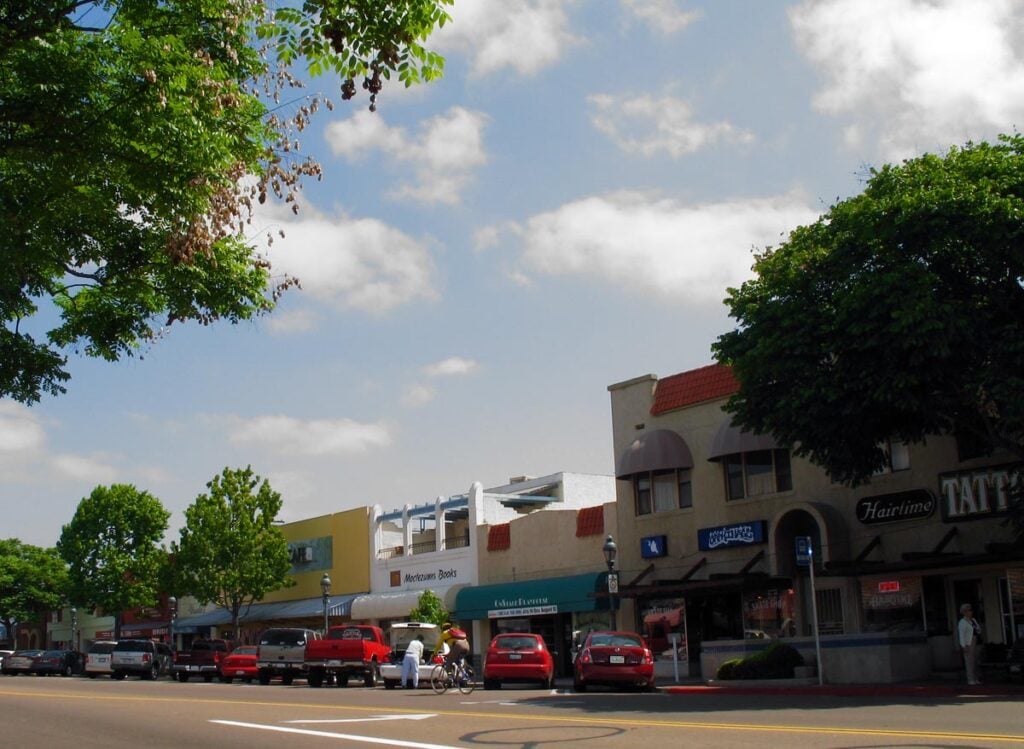
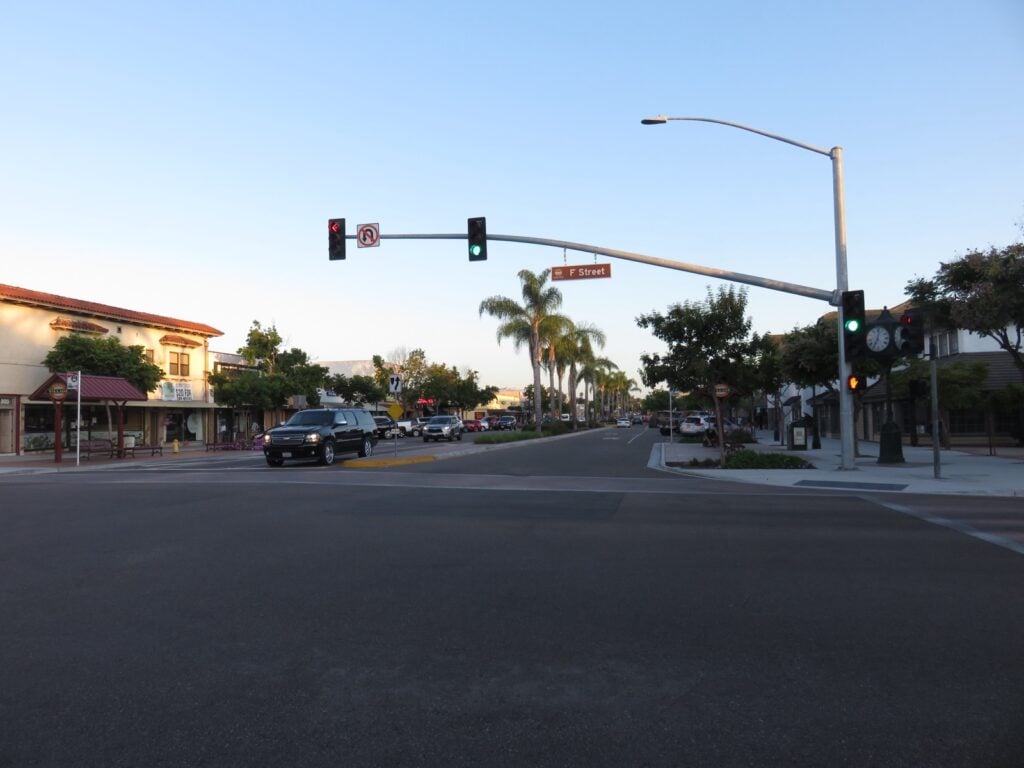
By the 2000s, Third Avenue had grown quiet. In February 2021, Star-News columnist Carlos Davalos described it as a “sleepy thoroughfare” that had been hit by new shopping options on the city’s east side, then by online shopping, the housing crash and the pandemic. Starting in 2012, the city and partners including the Third Avenue Village Association and SANDAG put slightly more than $14 million into narrowing the street, widening sidewalks and planting medians. Craft breweries and restaurants followed. Davalos opened his column with a line that summed up the bet.
“They have rebuilt it, now we’ll see if they will come.”
Carlos Davalos, The Star-News, Feb. 11, 2021
The district has since been rebranded as Downtown Chula Vista. For a dental office, the demographics around it are distinct. In ZIP code 91910, the Census Bureau’s 2020–2024 estimates put the Hispanic or Latino share of residents at 65.7 percent, nearly double the county’s 34.6 percent, and half of residents age 5 and older speak Spanish at home. Median household income is $90,222, below the county’s $106,268. The practice does not publish which languages its staff speak.
Questions patients ask
What are the office hours?
The practice lists Monday through Thursday, 8 a.m. to 5 p.m., and is closed Friday through Sunday. The phone number is (619) 425-7700, and the practice says appointments can also be booked online through Zocdoc.
Which insurance plans does 613 Dentistry accept?
The website lists Aetna, Blue Cross Blue Shield, Cigna, Delta Dental, Principal, MetLife, Humana and UnitedHealthcare, and offers an in-house dental membership plan, Cherry financing and CareCredit. Medi-Cal Dental is not on the list.
Does the office use OraVerse?
The practice website does not say. Patients who want to shorten numbness after a procedure can ask any dentist whether the drug is available and appropriate.
Where is the office?
613 Dentistry is at 613 Third Ave., Chula Vista, CA 91910, in the Downtown Chula Vista district. The practice says it also sees patients from Eastlake, Otay Ranch, Bonita and National City.
This feature was written from public information only. Dentist News Today did not interview the practice, and coverage is never paid. Corrections are welcome through our contact page.
Sources
- US 6,432,401: Local anesthetic methods and kits (Weber, Katz), Google Patents / USPTO, granted Aug. 13, 2002
- EP1551430A2: Botulinum toxin dental therapies and procedures (Katz, Blumenfeld), Google Patents / European Patent Office, published July 13, 2005
- SA-born dentist invents drug, IOL (Di Caelers), June 9, 2008
- Novalar receives FDA approval for OraVerse, DentistryIQ, May 30, 2008
- Drugs@FDA record: OraVerse, NDA 022159, U.S. Food and Drug Administration (openFDA)
- Provision of Botox solely for cosmetic purposes is outside the scope of dental practice in California, California Dental Association, June 29, 2022
- Dentist in Chula Vista, CA | 613 Dentistry, 613 Dentistry
- Meet Our Doctors, 613 Dentistry
- About Us, 613 Dentistry
- Carli Katz (staff profile), DentalWorks
- License details: Katz, Howard Ian (Dentist 36323), Dental Board of California / Department of Consumer Affairs
- License lookup: Katz, Carli Simone (Dentist 104986), Dental Board of California / Department of Consumer Affairs, checked Nov. 9, 2026
- NPI 1023501210: Carli Simone Katz, DMD, CMS NPPES NPI Registry
- NPI 1376694430: Howard Ian Katz, DDS, CMS NPPES NPI Registry
- Third Avenue’s new look complete, The Star-News (Carlos Davalos), Feb. 11, 2021
- In Your Neighborhood: Chula Vista’s History of Explosive Growth Inspires City’s Promising Future, NBC 7 San Diego, Aug. 17, 2022
- Chula Vista, California, Wikipedia
- Memorial Park, 373 Park Way, Chula Vista, ChulaVista.com
- ZCTA 91910 profile (ACS 2020–2024 5-year estimates), Census Reporter / U.S. Census Bureau
- San Diego County profile (ACS 2020–2024 5-year estimates), Census Reporter / U.S. Census Bureau
- Advanced Technology (lists OraVerse), Steve Horne, DDS
- Census Geocoder: 613 Third Ave, Chula Vista (distances computed from Census geocodes), U.S. Census Bureau